Eight Systems. Zero Conversations Between Them.
Your ERP knows what was ordered. Your MES knows what was produced. Your SCADA knows how the machines performed. But none of them share that information with each other — so your team spends hours manually bridging the gaps. We connect your machines, systems, and data sources into a single operational platform. No rip-and-replace. No 18-month megaproject. Just data flowing where it needs to go.

The Disconnection Tax You’re Paying Every Day
Quantify the hidden cost of disconnected systems. This section should make a plant manager realize they’re losing real money on something they’ve accepted as “just how things work.”
Count the systems in your operation. There’s the ERP — probably SAP or Microsoft Dynamics, customized over years by consultants who are no longer available. There’s the shop floor: SCADA for machine monitoring, a separate MES (or maybe just Excel), and the PLC programs embedded in each machine. There’s the quality system, the maintenance log (paper or CMMS), the warehouse management tool, and the scheduling board that might still be a whiteboard.
Now count how many of those systems share data automatically. In most mid-sized factories, the answer is: almost none. Data moves between systems the way it has for decades — copied by hand, exported to CSV, emailed as attachments, or carried on USB drives by engineers who know which folder to look in.
What this actually costs you:
“Hours lost to re-keying.”
Your production planner enters the same job data into the ERP and the scheduling tool. Your quality engineer copies test results from the machine display into a spreadsheet. Multiply this across three shifts and you’re burning thousands of hours per year on data transcription.
“Decisions made on stale data.”
By the time yesterday’s production numbers make it into Monday’s management report, the window to act on them has closed. Real-time visibility doesn’t exist because the systems that generate the data don’t feed the dashboards.
“Integration attempts that failed.”
Maybe you tried once. A middleware vendor promised to connect everything. Six months and €80k later, you had a brittle point-to-point connection between two systems that broke every time one of them updated. Now nobody wants to try again.
“AI and analytics projects that stall.”
Your AI vendor says they need “clean, connected data.” But your data isn’t clean and it isn’t connected. So the AI project stays in pilot forever, because nobody solved the plumbing problem first.
“Compliance blind spots.”
Traceability audits require end-to-end data chains from raw material to finished product. When your systems are disconnected, assembling that chain takes days of manual work — and you’re never fully confident it’s complete.
First, We Map Every Connection and Every Gap
Before we connect anything, we need to understand what’s already there. Most companies have never had a complete map of their data landscape — they know what each system does, but nobody has documented how (or whether) they exchange information.
What our integration architects do in the Analyze phase:


System landscape mapping
We inventory every system, database, file share, and manual process in your operation. What connects to what? Through which protocol? How often? Who maintains it? The result is the first honest architecture diagram most companies have ever seen.
Data flow analysis
We trace how information moves (or doesn’t move) between systems. Where are the manual handoffs? Where is data duplicated? Where are the latency bottlenecks? Where do errors get introduced? This reveals the “disconnection tax” in concrete terms.
Protocol and interface audit
We assess every system’s integration capabilities: APIs, database access, file exports, OPC-UA, MQTT, proprietary protocols. For legacy systems with no modern interfaces, we identify bridge strategies (edge gateways, data historians, wrapper APIs).
Integration architecture design
Based on the audit, we design the target architecture: which systems connect to which, through what middleware or pipeline, at what frequency, and with what data transformation. This blueprint becomes the Build specification.
What you walk away with:
System Landscape Map
Every system, connection, protocol, and manual workaround documented. Gaps and risks identified. The complete picture of your current state.
€15–25k fixed fee (Discovery) €10–18k (Data Assessment)
Data Flow Diagram
How data moves today vs. how it should move. Every manual handoff, duplication point, and latency bottleneck mapped and quantified.
4 weeks (Discovery) 2–3 weeks (Data Assessment)
Integration Blueprint
Target architecture with middleware selection, pipeline design, phasing plan, and effort estimates. Ready to hand to a Build team.
Every failed integration project we’ve seen skipped this step. They jumped straight to connecting systems without understanding what they were connecting or why. The Analyze phase prevents that.
Then, We Connect Everything That Should Be Talking
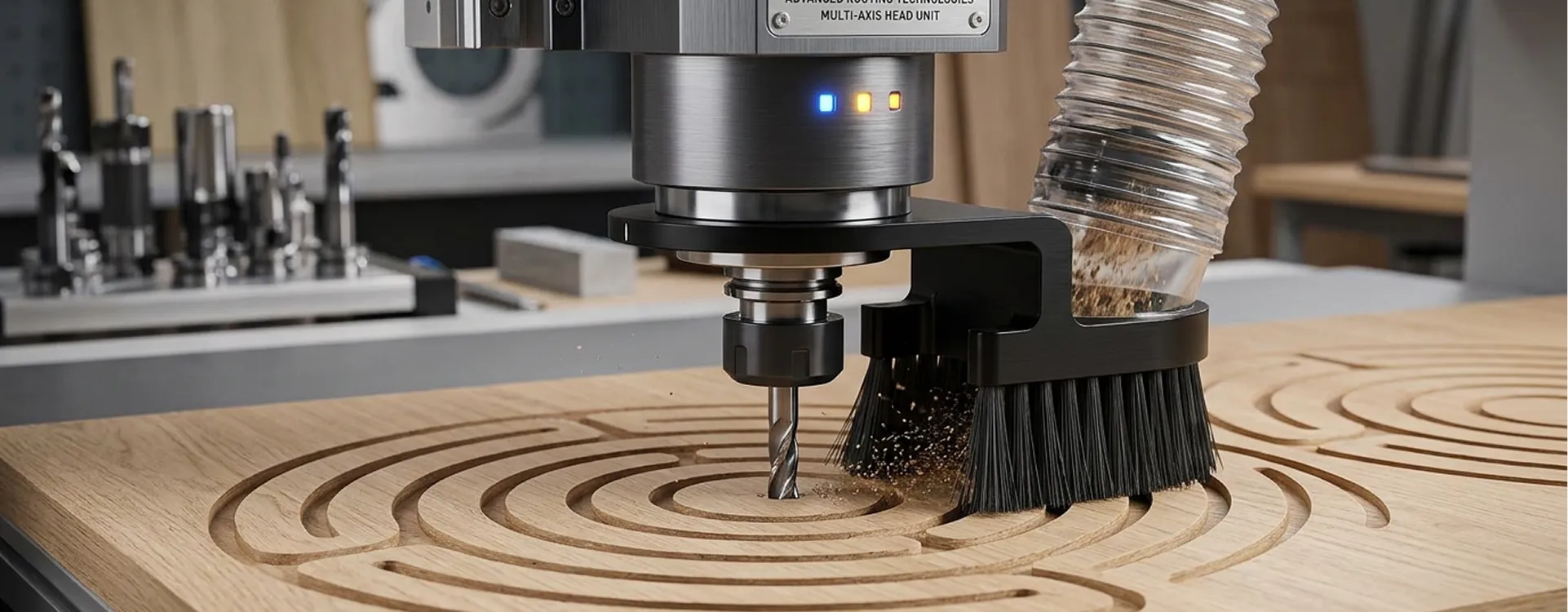
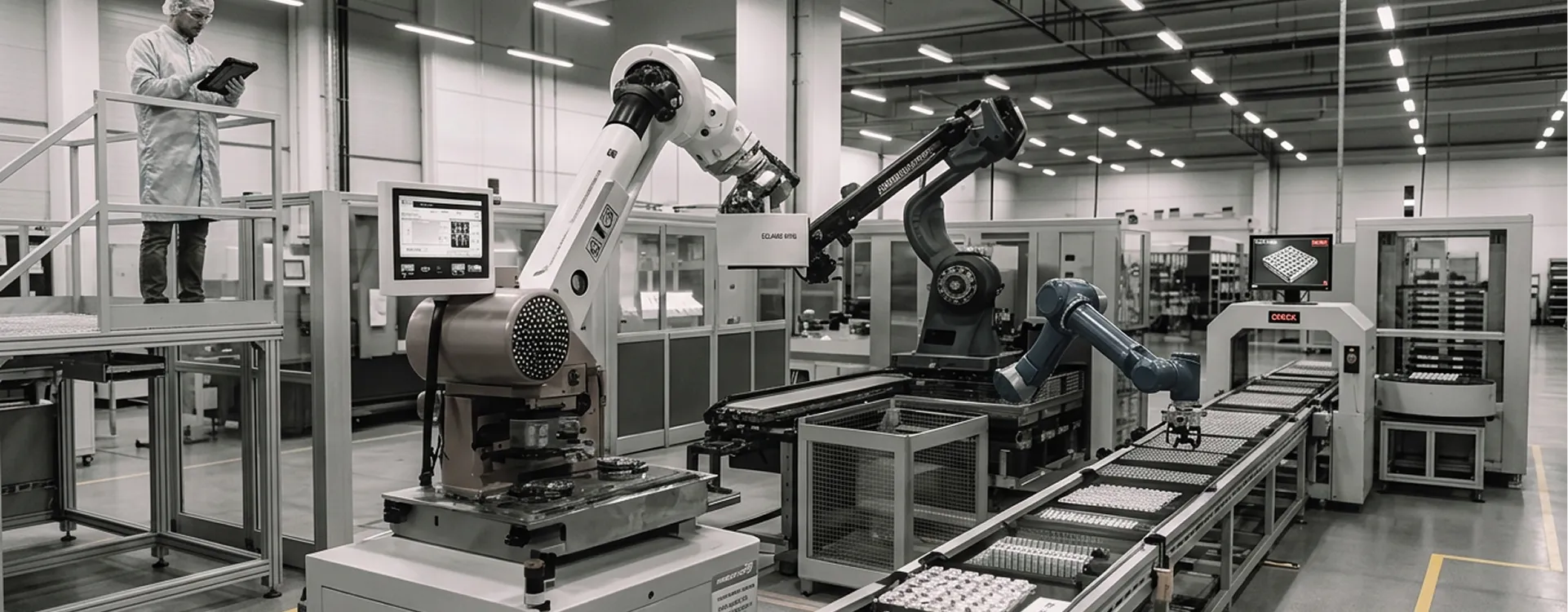
Integration is the Primary discipline in 12 Build services — tied with AI Agents as the most cross-cutting Area. Where Engineering builds the platforms and AI Agents provides the intelligence, Integration provides the connective tissue that makes data flow between all of them. Without Integration, you have islands. With it, you have an operational platform.


Connected Today. Still Connected Tomorrow.
An integration that works on deployment day can break three months later when one system updates its API, another changes its data format, or a new machine is added to the line. The Operate phase ensures your connections stay alive and your data keeps flowing.
Pipeline Monitoring & Health
24/7 monitoring of every data pipeline, API connection, and edge gateway. Automated alerting when data stops flowing, latency spikes, or quality degrades. You find out about breaks before your operators notice missing data on their dashboards.
Upgrade & Migration Support
When your ERP vendor releases an update, or you add a new production line, or you switch cloud providers — we adapt the integration layer. Version-controlled integration configurations mean changes are tested, staged, and rolled back if needed.
.png)
Data Governance & Compliance
Master data management across connected systems. Data lineage tracking for compliance audits. GDPR-compliant data handling for operational data crossing system boundaries. Clean data in means clean data out.
Why this matters: integration is not a one-time project. It’s a living system that evolves as your operation evolves. The factories that treat integration as “done” after go-live are the ones calling us six months later because everything broke when SAP updated.
We Speak Every Protocol Your Machines Do
Integration in industrial environments means dealing with protocols that consumer software engineers have never heard of. Our team has production experience with every major industrial communication standard — and the legacy workarounds for the machines that don’t support any standard at all.
The industrial protocol line is the differentiator. Most IT integrators know REST APIs and maybe Kafka. Our team also knows OPC-UA address spaces, Modbus register maps, and how to extract data from a 15-year-old Siemens S7 PLC that predates any modern interface. That’s the difference between an IT firm and an industrial technology partner.
Case studies

Strategic Partnership
Since mid-2022, Cadran has been the strategic technology partner for HOMAG Group, the world’s leading provider of integrated solutions for woodworking production. We co-develop and maintain materialManager and materialManager Advanced, HOMAG’s web-based applications for centralized material data management, inventory control, and automated allocation across edgebanding and panel processing operations.
What we built together: seamless data import from Excel, ERP systems, and industry software; real-time inventory tracking with automated material allocation and booking; direct integration with HOMAG machines and production planning software to optimize cutting and nesting; and automatic saw parameter adjustment based on materials, tools, and quality requirements. The result: automated material allocation and optimized cutting reduced waste by up to 15%, while real-time inventory tracking eliminated manual errors and improved operational accuracy.


Homag
Read Case Study

Cadran co-develops Ceiton’s enterprise workflow and resource management platform, serving broadcasters from MDR to Red Bull Media House with scalable project management and scheduling automation.

Ceiton Technologies — CEITON Workflow & Resource Management Platform
Read Case Study

Ongoing partnership
WEINMANN builds the machines that build the buildings. As a leading manufacturer of wall, roof, and ceiling production systems for timber construction, their equipment runs in workshops and prefab plants worldwide. Cadran co-develops WupWorks, WEINMANN’s digital production platform, the software that turns architectural CAD data into precision-manufactured timber elements, with real-time 3D visualization that lets operators see exactly what’s happening at every step.


Weinmann
Read Case Study
Who Connects Your Systems
Integration Architect
Designs the integration architecture. Selects middleware, maps data flows, defines protocols. Leads the system landscape assessment in Discovery. The person who decides how your systems will talk to each other — and in what order.
IoT / OT Engineers
Specialists in industrial protocols: OPC-UA, MQTT, Modbus, EtherCAT. They’ve configured HOMAG woodCommander interfaces, read Siemens S7 PLC data blocks, and built edge gateways for machines that were never designed to be connected.
Data Engineers
Build the pipelines. ETL/ELT design, data quality automation, real-time streaming, batch processing. They ensure data arrives where it needs to go, when it needs to get there, in the format it needs to be in.
Backend Engineers
Build the middleware, APIs, and microservices that form the integration layer. Cross-disciplinary with the Engineering team — the same developers who understand cloud architecture also understand factory-floor data constraints.
DevOps / Platform Engineers
Deploy and manage the integration infrastructure. Edge gateways, message brokers, API gateways, monitoring — all version-controlled and automated so your integration layer is reproducible, not fragile.
The industrial edge
Our IoT/OT engineers have physically stood next to HOMAG CNC machines, traced cable runs to PLC cabinets, and configured OPC-UA servers on the factory floor. They don’t just write integration code — they understand the physical systems the data comes from.

Questions We Get Asked About Integration
This is the number-one fear, and it’s legitimate. Our approach is non-invasive by design: we read data from existing systems through their native interfaces (APIs, database views, OPC-UA endpoints), we don’t modify their internal logic. New connections are tested in staging environments with production-representative data before going live. Rollback plans are built into every deployment. Your ERP, MES, and SCADA continue running exactly as they were while we add the integration layer alongside them.
We’ve seen it all: undocumented SAP customizations, Windows XP machines running 15-year-old PLC software, databases with column names in the original developer’s initials. Our first step is always a reverse-engineering audit. We document what the system does, how it stores data, and what interfaces exist (even if that’s just a scheduled CSV export to an FTP folder). From there, we build a bridge — even if the bridge is an edge gateway reading serial port data from a machine that predates Ethernet.
It depends on scope, but here are benchmarks: connecting a single machine type to a cloud dashboard takes 2–4 weeks. A full ERP-to-MES bridge runs 2–4 months. A plant-wide IoT platform connecting 10+ machine types takes 4–8 months. We phase every project to deliver incremental value — you don’t wait 8 months for the first connected machine. You start seeing data flow in weeks.
Most integration failures happen for one of three reasons: (1) no Discovery phase — assumptions instead of architecture, (2) generic middleware that couldn’t handle industrial protocols, or (3) a vendor who knew REST APIs but not OPC-UA. We mitigate all three: every project starts with a Discovery assessment, we work with industrial protocols natively, and our team has factory-floor experience. The failed project you’re thinking of probably tried to treat your plant like an office IT environment. We don’t.
Integration architectures evolve. Our Operate phase includes upgrade and migration support: when SAP releases a patch, when you add a new production line, or when you switch from on-premise to cloud, we adapt the integration layer. We build integrations with versioned configurations and automated testing, so changes are validated before they go live. You’re never locked into a static setup that breaks when anything around it changes.
No. We work with Azure (primary), AWS, and Google Cloud. We also support hybrid deployments where sensitive OT data stays on-premise and only aggregated data goes to the cloud. For clients already invested in a specific platform, we build on what you have. For greenfield environments, we recommend based on your specific requirements (Azure for Microsoft-heavy stacks, AWS for IoT-heavy deployments).


Ready to see what your data can do?
Start with a conversation. No pitch deck. No obligation. Just a focused discussion about your operations and where AI could make the biggest difference.