Your factory runs 24/7. Your software should too.
Production-grade software for industrial operations, built to connect machines, systems, data and teams without breaking when your plant scales.
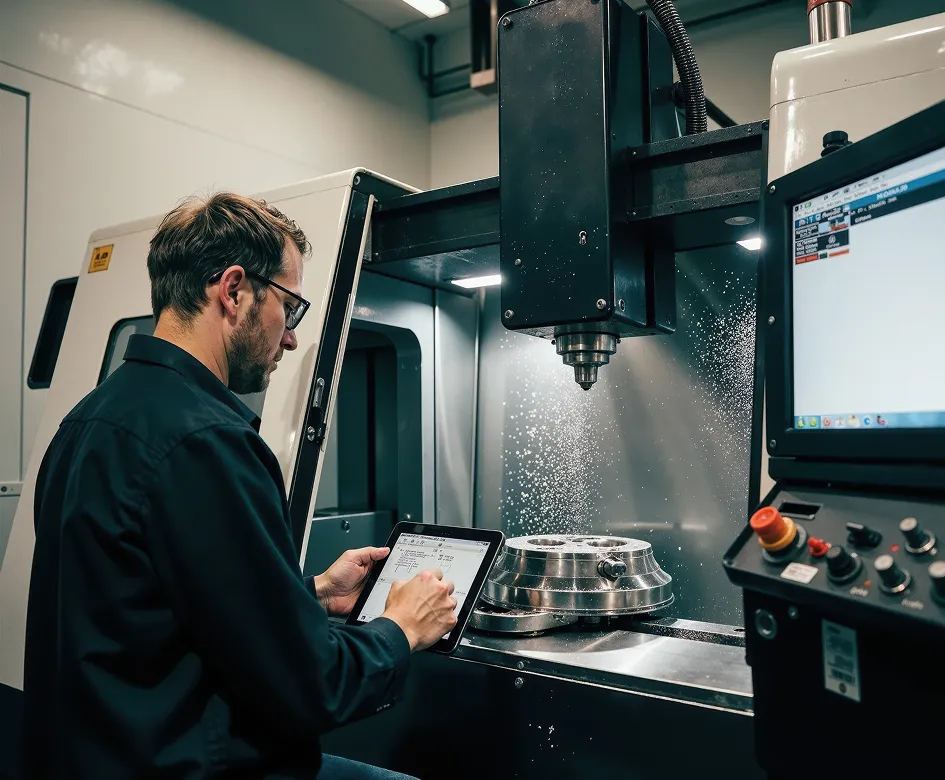
What happens when industrial software is an afterthought
We help industrial companies replace that patchwork with software that is connected, scalable and built for production.
You know the pattern. Your ERP was implemented a decade ago and nobody fully understands the customizations. Your shop floor runs on a local SCADA server, production data gets manually copied into spreadsheets every Monday and the last time someone tried to connect a new IoT sensor, it took four months and a consultant who never came back.
The result: your plant generates more data than ever, but your software can’t keep up. Decisions get made on gut feel because the dashboard is two days behind reality. Quality reports are assembled by hand because the systems that should talk to each other don’t. And every time the business needs something new, a new machine integration, a new compliance report, a customer-facing portal, it becomes a six-month IT project that nobody has bandwidth for.
Meanwhile, the team that understands how all these systems fit together is getting smaller every year.
The symptoms we hear most:
“Our ERP doesn’t talk to the shop floor.”
Data re-entry between systems wastes hours every week and introduces errors.
“We have data, but nobody can access it.”
Information is trapped in local servers, spreadsheets and one person’s head.
“Every integration is a custom project.”
No API layer, no standard architecture. Every new connection is built from scratch.
“We can’t scale what we have.”
Current systems were built for one plant, one product line, one country. Growth breaks them.
“Our IT team is 4 people and they’re drowning.”
Maintenance consumes 80% of capacity. There’s no time for new development.
First, we understand what you’re working with
Before we write a single line of code, we need to understand the landscape. What systems are running? How are they connected (or not)? Where is the data? What’s the quality? What’s the technical debt? Our engineering team leads the technical assessment that underpins every Cadran engagement.
What our engineers do in the Analyze phase:

Architecture audits
We map your entire technical ecosystem: ERP, MES, SCADA, databases, APIs, cloud services and the Excel files that are quietly holding everything together. You get a clear picture of what you have, what’s working and what’s creating risk.
Data Assessment
We evaluate data quality, accessibility and readiness across your systems. This is the foundation for any AI or analytics initiative. If the data isn’t clean, connected and accessible, nothing built on top of it will work.
Technical feasibility scoring
For every opportunity identified in Discovery, our engineers assess: Can this be built with your current infrastructure? What needs to change? How long will it take? What are the dependencies and risks?
What you walk away with:
Data Health Scorecard
Quality, completeness and accessibility scores across every data source in your operation.
€15–25k fixed fee (Data Assessment: €10 18k additional)
Architecture Blueprint
A system map showing current architecture, integration points, gaps and technical debt, the first honest picture most companies have ever seen.
2 weeks (Discovery) 2–4 weeks (Data Assessment)
Technical Roadmap
Prioritized engineering initiatives ranked by impact, feasibility and dependency chain. Clear go/no-go recommendations.
Zero. These are standalone deliverables. You own the outputs whether you continue with us or not.
Then, we build what your operation actually needs
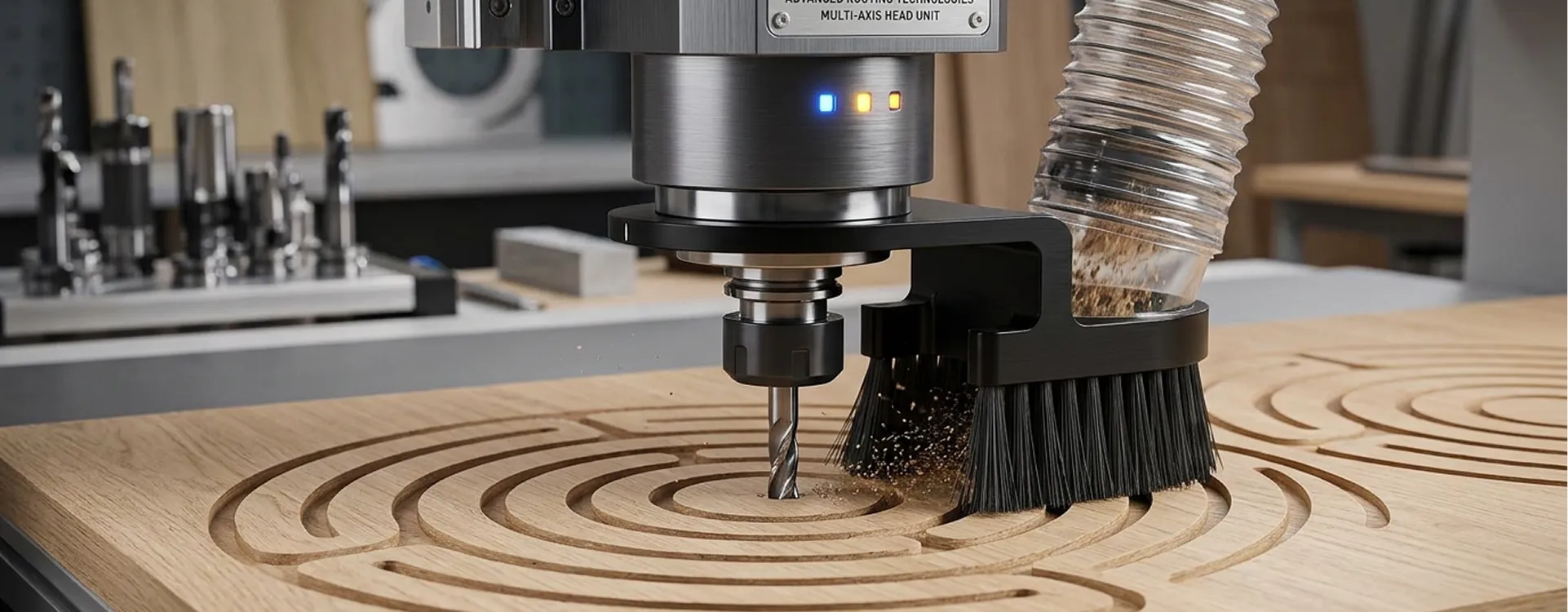
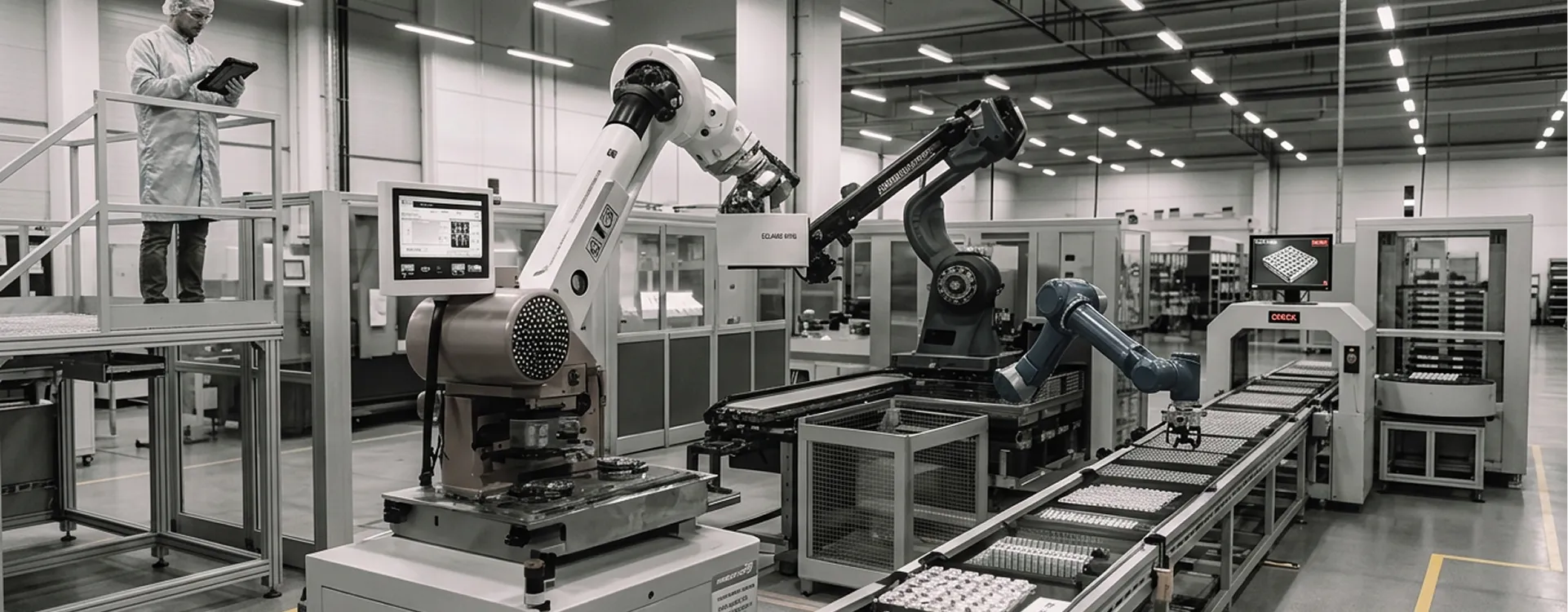
This is where Engineering does its heaviest work. Based on the roadmap from Analyze, we design, develop and deploy production-grade software systems. Not off-the-shelf tools configured to almost-fit. Not prototypes that looked great in a demo but collapse under real load. Purpose-built applications that solve your specific problems with your specific data on your specific infrastructure.
Engineering is the primary discipline in more Cadran Build services than any other Area. Here’s what we construct:


We don’t hand off and hope. We stay and improve.
Go-live is where most vendors disappear. It’s where we lean in. Our engineering team continues to manage, monitor and improve the systems we build, because software that isn’t maintained decays faster than hardware.
MLOps & Scalability
We keep your AI models performing in production. Model retraining when data drifts. Infrastructure scaling when volumes grow. Monitoring that catches degradation before your team notices.
Performance Monitoring
Real-time health dashboards for every system we’ve built. SLA tracking. Quarterly reviews with improvement recommendations. You always know how your platform is performing.
.png)
Data Governance & Compliance
EU AI Act readiness. GDPR compliance for operational data. NIS2 security controls for critical infrastructure. Audit trails that satisfy regulators without burdening your team.
Because our fees are tied to your outcomes, we have every incentive to keep improving. If the system we built stops delivering value, we feel it too.
Built on what works
We’re not married to a single vendor or framework. We choose the right tool for each problem and we’re transparent about what we use and why.
* Every technology listed above is in active production use across our client base. This isn’t a wishlist, it’s what we deploy, maintain and support every day. The Azure stack in particular is battle-tested through 3+ years of co-development with HOMAG Group.
Case studies

Strategic Partnership
Since mid-2022, Cadran has been the strategic technology partner for HOMAG Group, the world’s leading provider of integrated solutions for woodworking production. We co-develop and maintain materialManager and materialManager Advanced, HOMAG’s web-based applications for centralized material data management, inventory control, and automated allocation across edgebanding and panel processing operations.
What we built together: seamless data import from Excel, ERP systems, and industry software; real-time inventory tracking with automated material allocation and booking; direct integration with HOMAG machines and production planning software to optimize cutting and nesting; and automatic saw parameter adjustment based on materials, tools, and quality requirements. The result: automated material allocation and optimized cutting reduced waste by up to 15%, while real-time inventory tracking eliminated manual errors and improved operational accuracy.


Homag
Read Case Study

Cadran co-develops Ceiton’s enterprise workflow and resource management platform, serving broadcasters from MDR to Red Bull Media House with scalable project management and scheduling automation.

Ceiton Technologies — CEITON Workflow & Resource Management Platform
Read Case Study

Ongoing partnership
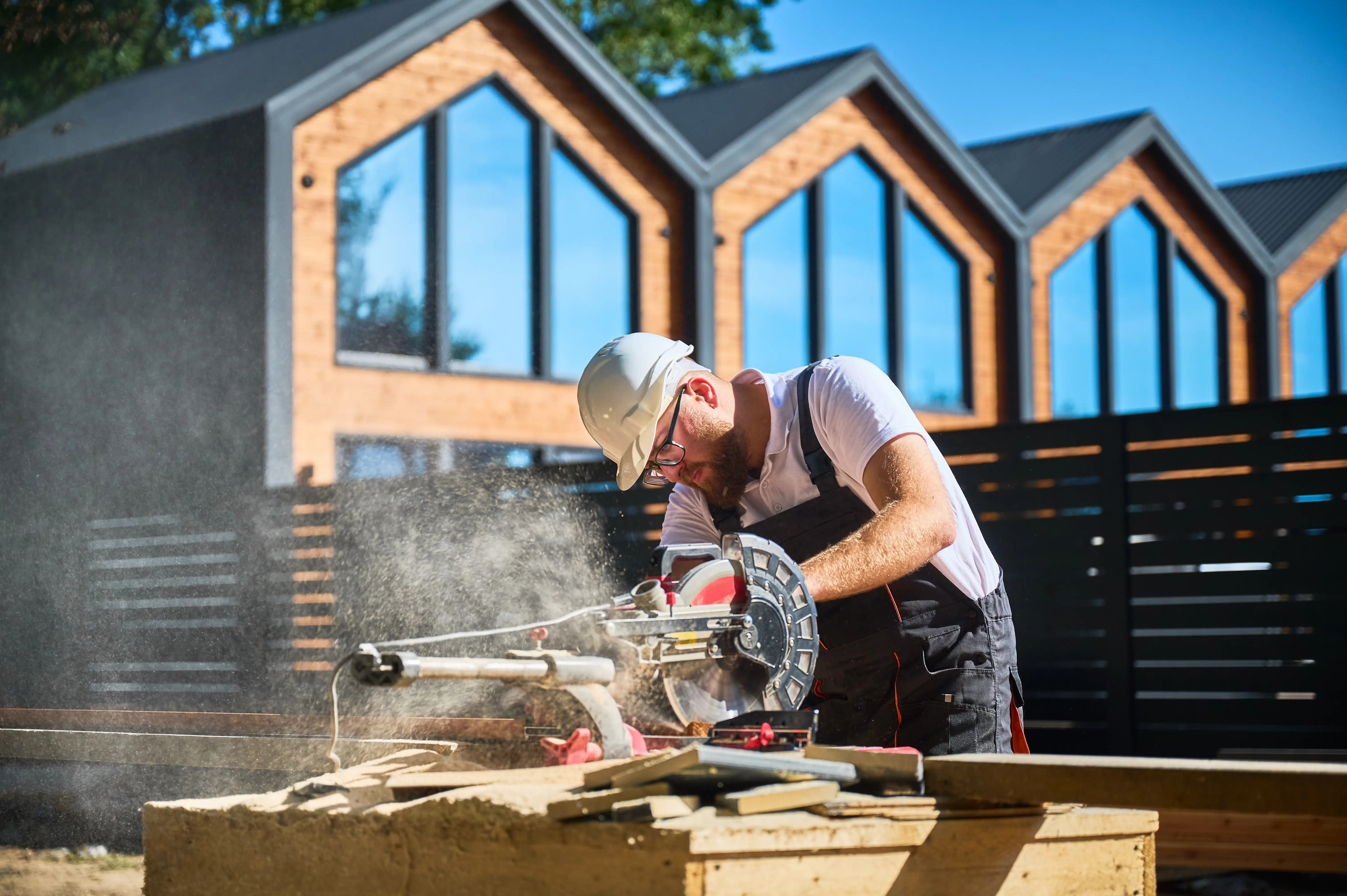
WEINMANN builds the machines that build the buildings. As a leading manufacturer of wall, roof, and ceiling production systems for timber construction, their equipment runs in workshops and prefab plants worldwide. Cadran co-develops WupWorks, WEINMANN’s digital production platform, the software that turns architectural CAD data into precision-manufactured timber elements, with real-time 3D visualization that lets operators see exactly what’s happening at every step.

Weinmann
Read Case Study
Outcome metrics
Waste reduction via automated material allocation (HOMAG)
Years of co-development with HOMAG Group
Live products in production across global customer base
Battle-tested in 24/7 manufacturing
Who you’ll work with
Solutions architect
Designs the technical architecture. Leads the Analyze phase. Maps your systems, identifies integration points and creates the blueprint everything else is built on. Stays involved through Build to ensure design intent is preserved.
Solutions architect
Backend (.NET, Python, Java) and frontend (Angular, React, Blazor) developers who’ve built for industrial environments. They understand OPC-UA protocols, SCADA constraints and what it means for software to run in a plant that doesn’t stop.
QA / Test engineers
Automated testing pipelines, integration testing, performance testing. Every deployment is validated before it touches production. SLAs for reliability are backed by structured QA processes.
DevOps engineers
CI/CD pipelines, infrastructure-as-code, cloud management. Your deployments are automated, repeatable and auditable.
Product / Delivery lead
Agile/Scrum execution. Your single point of contact. Manages scope, timelines and communication. Ensures what we build matches what you need, not what we assumed.
Team continuity is non-negotiable.
The engineers who learn your systems in Analyze are the same ones who build in Build and support in Operate. Knowledge doesn’t leave when a project phase ends.

Questions we get asked
No. Our engineering team operates as an extension of yours — not a dependency. During Build, we do the heavy lifting. During Operate, we manage the systems we’ve built. Your team stays in control of decisions and priorities, but the engineering capacity comes from us. Most clients tell us their internal IT team actually gets bandwidth back because they stop firefighting legacy systems.
Discovery takes 4 weeks. You walk away with a roadmap and a Data Health Scorecard. A typical Build engagement for a first module (e.g., a machine connectivity platform or an MES implementation) runs 3–6 months to production deployment. We design for incremental value delivery — you don’t wait 12 months for a big-bang launch.
Good. We don’t ask you to rip and replace. Our engineering approach is integration-first: we build on top of and alongside your existing systems. We’ve integrated with SAP, Microsoft Dynamics, HOMAG woodCommander, Siemens PLCs, and dozens of legacy setups. If it has an API, a database, or even a file export, we can connect it.
Most failed projects skip the Analyze phase. They jump straight to building something based on assumptions — and discover too late that the data wasn’t ready, the architecture couldn’t support it, or the users didn’t want it. Our process starts with Discovery precisely to prevent this. You don’t invest in Build until you have evidence it will work. And the 50% Discovery credit means the assessment isn’t a sunk cost.
Discovery: €15–25k fixed fee. Data Assessment: €10–18k. Build engagements are scoped and priced based on Discovery findings — we don’t quote Build before we understand what’s needed. Operate is priced on a monthly retainer tied to SLAs and outcome metrics. We’re transparent about pricing because we believe informed buyers make better partners.
You’re exactly who we built this for. Our services are designed for mid-sized manufacturers with 50–500 employees and €10M–€500M revenue. We understand that your IT team has 4 people, your budget is real, and you can’t afford a failed project. That’s why we start small (Discovery), prove value fast (first module in 3–6 months), and scale only when the evidence supports it.


Ready to see what your data can do?
Start with a conversation. No pitch deck. No obligation. Just a focused discussion about your operations and where AI could make the biggest difference.