Analyze. Build. Operate. How we de-risk every engagement.
Industrial software and digitalization projects typically fail due to poor problem selection, unready data, complex integration or lack of maintenance. Our lifecycle prevents these by prioritizing decisions before commitments, evidence before development and operations before handoff.
The three phases at a glance
Every Cadran engagement follows the same structured path, even when the phases are adapted to the client’s starting point. Here’s what each phase delivers and the deliverables that come with it.
Analyze
Purpose
Understand the problem. Validate the solution. Generate evidence before investment.
What you bring in
A challenge, an opportunity or a question. No certainty required, just the willingness to investigate honestly.
What you walk out with
A defined problem, a quantified opportunity, a validated approach and a clear go / no-go decision with the numbers to back it.
Build
Purpose
Build the system. Integrate it with your environment. Deploy it to production.
What you bring in
An approved scope from Analyze or a clear specification if you’re ready to skip directly to Build.
What you walk out with
Production-grade software, deployed and in active use. Documented, tested and integrated with your operations.
Operate
Purpose
Keep the system performing. Improve it continuously. Adapt it as conditions change.
What you bring in
A deployed system, ours or one we’ve inherited, that needs to remain reliable, performant and evolving.
What you walk out with
Ongoing operational excellence under SLA. Performance trending up over time. Compounding business value.
Analyze
The first phase
Most engagements start here, because the riskiest decision in any digitalization project is the one made before the work begins. Analyze de-risks that decision by generating evidence about the problem, the data, the technical feasibility and the business case.
What you can engage us for in Analyze
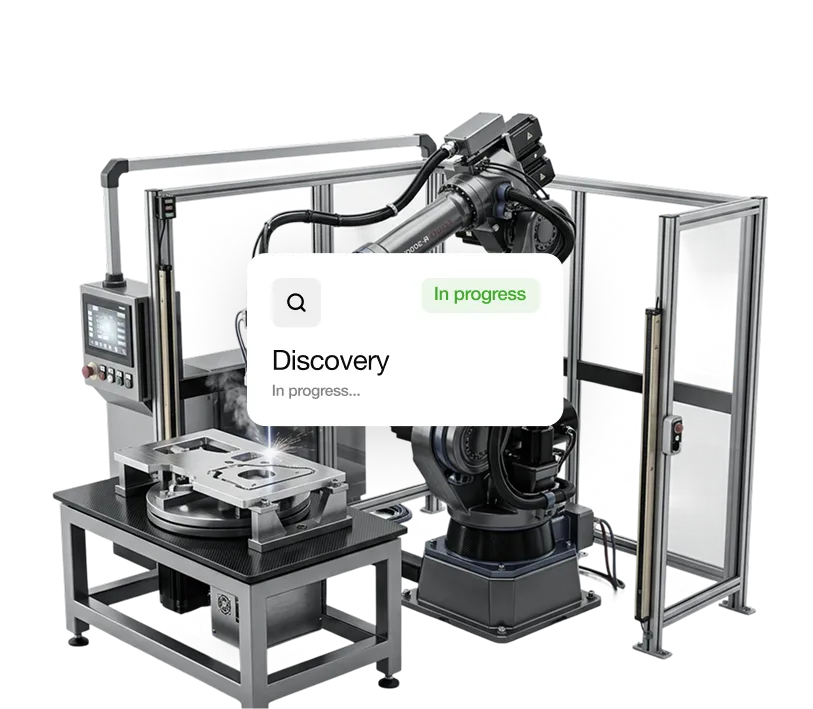
A structured assessment of a specific challenge or opportunity in your operation. Our consultants map your current systems and data landscape, identify the highest-impact opportunities and quantify the business case for each. You walk away with a prioritized roadmap, ROI estimates and a clear go / no-go recommendation. If you move forward to Build, 50% of the Discovery fee is credited toward the engagement (for projects over €150k). It's a low-risk way to find out what's possible.
A working prototype that validates a specific AI capability against your data, your infrastructure and your operational constraints. Not a demo, but a real system, processing real data and producing measurable results. You walk away with technical validation, performance benchmarks, integration findings and the evidence to decide whether to scale to production.
A dedicated assessment of your data readiness for AI. We audit data quality, completeness, accessibility and governance, then identify gaps and recommend the engineering work required to close them. Critical for clients who know they want AI but aren’t sure whether their data can support it.
Build
The middle phase
This is where Engineering, AI Agents, Integration, Automation and Innovation, our five Solution Areas, become real systems running in production. Build is the largest phase of most engagements and the one where Cadran’s integrated team model differentiates us most clearly.
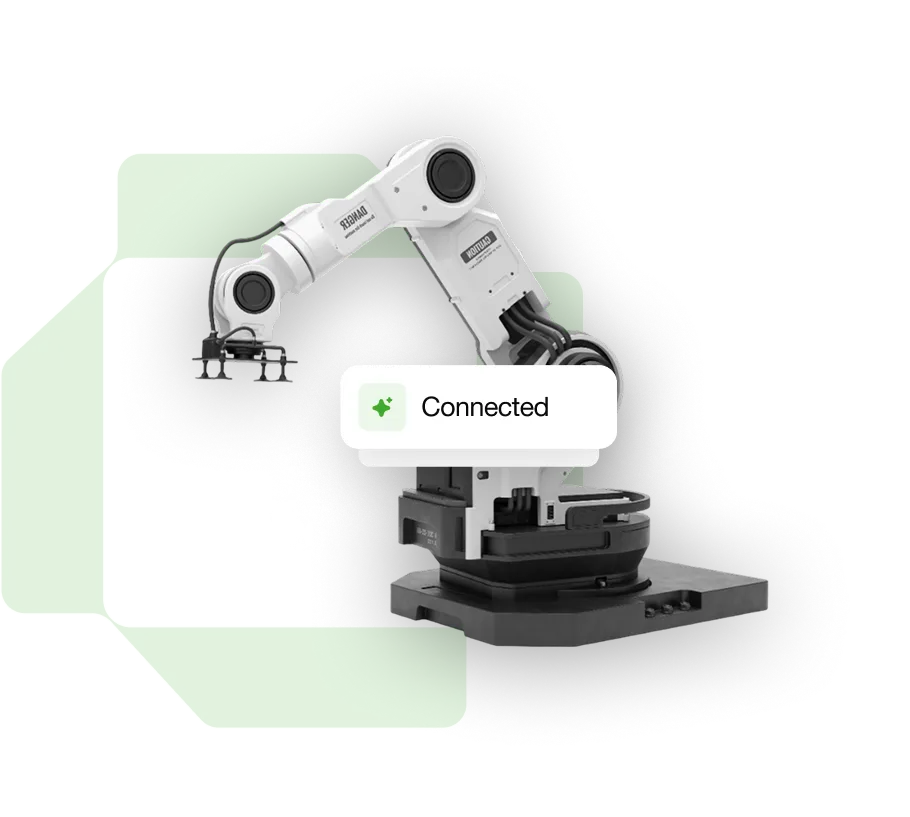
How Build engagements work:
Your team, extended
Cadran engineers work inside your team, joining sprint planning, code reviews and product decisions. Not a vendor delivering to a spec, but a partner co-developing a system.
Sprint-based delivery
Production code ships every sprint, with working software demonstrated to your stakeholders continuously. No multi-month black box where you wait for a release and hope it works.
Production-grade quality
Automated test pipelines. End-to-end coverage with Playwright. Nightly regression runs. Senior engineer review on every merge. We build systems that hold up on a Friday night shift.
Cloud-native by default
Modern architecture (microservices, containers, infrastructure as code), proven across 3+ years of HOMAG production workloads on Azure. EU-sovereign deployment options where data residency matters.
Documented for handover
Every system ships with architecture documentation, operational runbooks and the knowledge transfer your team needs to maintain it, whether that's us, your internal engineers or both.
What we build
Engineering
Custom software, cloud-native platforms, manufacturing operations management, IoT data pipelines and machine integration layers.
AI Agents
Production-grade AI: optimization models, predictive systems, copilots embedded in operator workflows, computer vision for quality and agentic AI for autonomous decision support.
Integration
ERP, MES, SCADA, CMMS and machine integration. OPC-UA, MQTT, Modbus. Connecting the systems that need to talk to each other but don’t.
Automation
Workflow automation, intelligent document processing, RPA, industrial process automation and AI-driven business process redesign.
Innovation
R&D pilots, applied research, technology validation in operational contexts and early-stage work that may not have existed as a category before this engagement.
Operate
The phase most consultancies skip
Go-live is not goodbye. Systems that aren’t maintained decay faster than the hardware they run on. AI models drift. Integrations break when upstream systems update. New edge cases appear in production that nobody anticipated during Build. The Operate phase exists because the value of a deployed system depends on what happens after it ships.

What Operate covers
Because we’re incentivized to. Our Operate engagements are recurring, which means our economic interest aligns with your continued success. When your system delivers more value year over year, our business does better. When it doesn’t, we have a problem to solve and we solve it.
Managed operations
Performance monitoring, incident response, bug resolution, infrastructure management and security maintenance. SLAs define response times, uptime commitments and escalation paths appropriate for the criticality of the system. The bar is the same one HOMAG’s customers expect when their machines start on Monday morning.
Continuous improvement
Regular check-ins that surface new opportunities, keep the system performing as intended, expand what's automated and adjust the system as your business evolves. Most Cadran clients automate 2–3 new processes every quarter once they're in Operate, because each round of automation tends to reveal the next one worth pursuing.
Performance monitoring
Dashboards that show how the system is performing against real business outcomes, not just technical metrics: OEE trends, waste reduction over time, cycle time improvements and whatever else the original business case promised. We keep track of whether those results are actually being delivered and step in to adjust when they aren't.
Not every engagement starts at Analyze
The standard path is Analyze → Build → Operate. But not every client starts there and not every engagement needs all three phases. Here are the patterns we see most often:
Standard engagement
You have a challenge but aren’t certain about the solution, the data readiness or the ROI. Discovery quantifies the opportunity before commitment.
Direct-to-Build
You’ve already done the analysis (internally or with another partner). The scope is clear and the data is ready. We pick up where you are.
Pure Analyze (R&D)
You want to validate a new technology, evaluate feasibility or generate evidence for a strategic decision. No commitment to Build at the outset.
Operate handover
You have a system built by another partner (or internally) that needs ongoing maintenance, performance optimization or continuous improvement. We inherit and improve.
Full lifecycle partnership
Strategic partnerships like HOMAG and WEINMANN. Multiple products developed and operated over years. Continuous Build cycles inside ongoing Operate engagements.
The lifecycle in action
Every case study in our portfolio demonstrates one or more phases of the lifecycle:
Common questions about how we engage
No. If you’ve already done your analysis or you have a clear specification, we can engage directly in Build. Discovery exists for clients who want evidence before commitment, not as a gate every engagement must pass through.
Then that's the result and you've saved the cost of building it. You keep the analysis, the data and the reasoning behind the recommendation. We'd rather tell you no at the end of Discovery than deliver a system nobody uses.
Yes. We start with an audit of the codebase, architecture and operational setup, then propose what needs stabilising before anything new gets added. Inherited systems are common in manufacturing.
Build engagements run from a single engineer for three months up to a full team over a year or more, depending on what the system requires.
Not in the classic sense. Our engineers work as a team with shared ownership of the outcome. If you need a team accountable for making a system work, that's what we do.


Most engagements start with Discovery. Yours can too.
A few focused weeks together and you come away knowing what the real problem is, what solving it would be worth and what we'd recommend doing next. No pressure to go further.